

Data is often described as the “new oil” of digital transformation and artificial intelligence. Yet within public administration, this valuable resource remains underutilized. When data is fragmented, inconsistent, and difficult to connect across systems, digital platforms and AI technologies struggle to deliver the transformative impact needed to improve government operations at scale.
Fragmented Data Remains a Major Bottleneck in Public Sector Digital Transformation
In recent years, public sector digital transformation initiatives have achieved significant progress. However, practical outcomes have not always matched the scale of investment.
One of the key challenges lies in data readiness. Many government organizations continue to face limitations in structured, standardized, and labeled datasets—the essential foundations required for large-scale AI deployment. As a result, a considerable portion of administrative processing still relies on manual data entry and reconciliation across disconnected systems.
This challenge is evident in the daily experiences of both citizens and public servants. Individuals are often required to submit the same information repeatedly across different administrative procedures. Government officials must verify records across multiple platforms that maintain separate versions of the same data. Such inconsistencies not only increase complexity and the risk of errors but also limit the ability to generate insights and leverage advanced technologies effectively.
The issue largely stems from how data systems have evolved. Many ministries, agencies, and local authorities developed digital platforms independently to address their specific operational needs. While these systems coexist, they often lack seamless interoperability. Differences in data standards and formats further complicate data aggregation, storage, and processing.
Beyond fragmentation and inconsistency, data reuse across government organizations remains limited. As administrative cases move through various stages—from submission and verification to review and approval—information is frequently re-entered or manually reconciled instead of being automatically inherited from previous steps.
Under these conditions, the adoption of AI remains constrained. Rather than transforming end-to-end workflows, AI is often deployed only for isolated tasks, limiting its ability to drive meaningful improvements in administrative efficiency.

Inconsistent data management and processing continue to hinder large-scale AI adoption in the public sector. (Source: ERP Today)
Enabling Data Connectivity to Redefine Digital Government Operations
These challenges highlight a fundamental reality: the core issue is not a lack of technology, but rather how data is organized and managed. As long as data remains siloed, even the most advanced digital systems will continue to operate as disconnected components rather than as an integrated ecosystem.
According to experts from the Viettel AI, government agencies should adopt a centralized data strategy by establishing shared data platforms that connect information sources across departments and systems.
A shared data platform serves as a unified environment for collecting, storing, governing, and managing data from multiple systems within a common architecture. Data can be integrated, cleansed, standardized, and labeled before being distributed back to operational systems for use. Instead of maintaining isolated datasets across individual agencies, information becomes a shared resource that can be accessed and leveraged more effectively.
More importantly, workflows become continuous rather than fragmented. Outputs generated at one stage can be automatically reused in subsequent stages, reducing repetitive data entry and minimizing manual processing.
“Once a modern data governance framework is established, AI can move beyond a supporting role and become a driving force for operational efficiency. With access to richer contextual information, including historical records and data from multiple sources, AI can support advanced capabilities such as automated case routing, faster processing, and data-driven decision-making,” a Viettel AI expert noted.
Several initiatives in Vietnam have already demonstrated the value of this approach.
Ninh Binh Province’s shared data platform has integrated more than 1,500 specialized datasets and recorded nearly 55,000 access sessions. The initiative has contributed to a 99.1% on-time and early completion rate for administrative procedures.
At the national level, Vietnam’s National Population Database has established a unified digital identity foundation, enabling other systems to access and verify trusted information. The platform has processed billions of transactions, reducing paperwork requirements, enabling automated verification, and improving the efficiency of public service delivery.
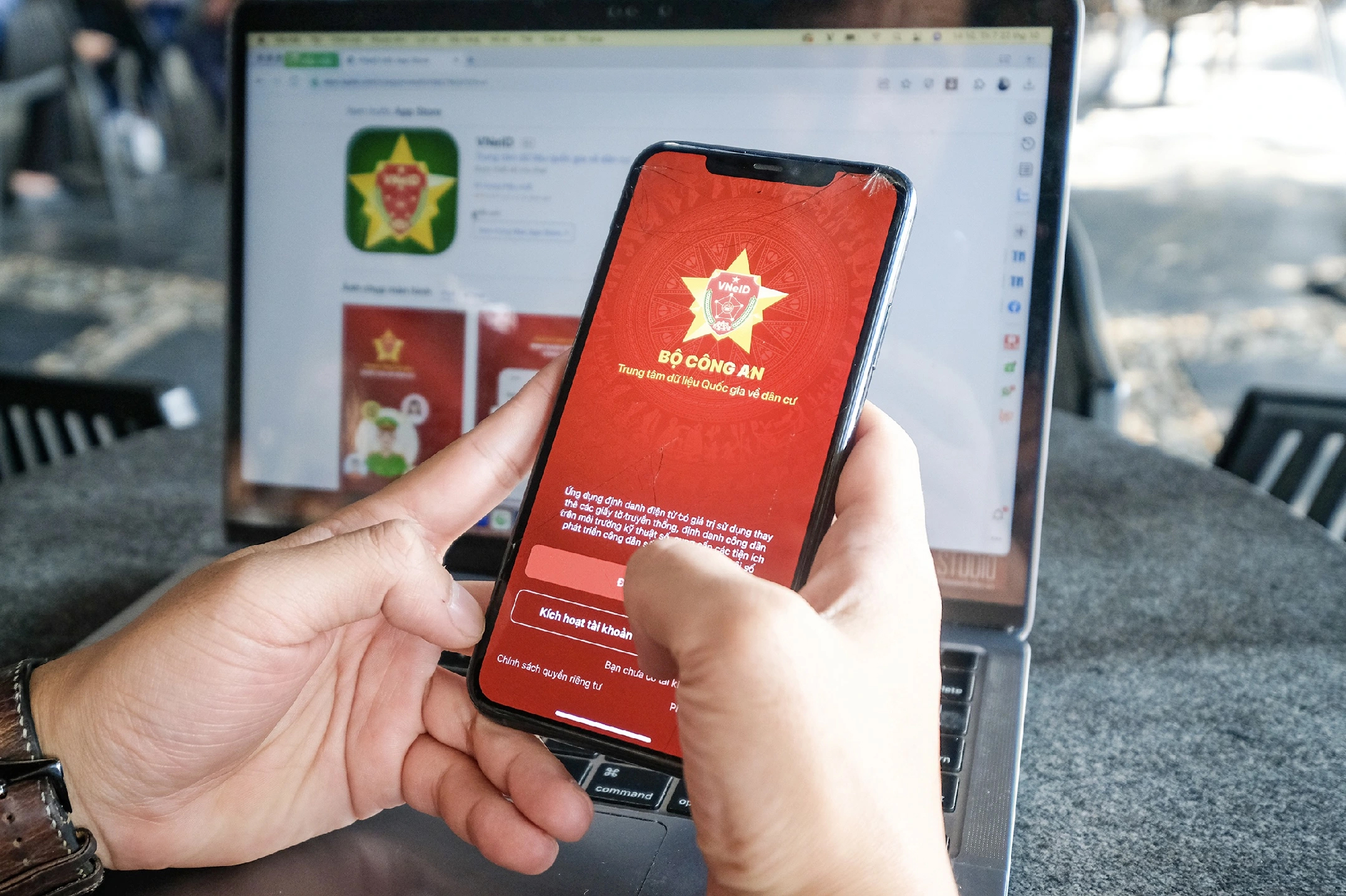
Vietnam’s National Population Database provides a unified identity foundation that supports secure and reliable data sharing across government systems. (Source: VTV)
Built on data that is accurate, complete, standardized, and continuously updated, AI applications can automate identity verification, detect inconsistencies, and support real-time case processing, significantly reducing reliance on manual operations.
This is also the direction Viettel AI is pursuing through solutions designed to help ministries, government agencies, and local authorities consolidate data from multiple systems into a unified infrastructure. Once integrated and standardized, data becomes ready for advanced analytics and operational intelligence.
One example is the Viettel Data Management and Analytics Platform (Viettel DAP). The platform automatically consolidates data, generates real-time reports and dashboards, performs multidimensional analytics, and supports operational monitoring within a single architecture. Organizations using the platform have reported reductions of up to 92% in reporting workloads and 95% in information aggregation time.
Looking ahead, shared data platforms represent more than a technical solution. They provide a foundation for transforming public administration into a more agile, data-driven operating model. As data becomes connected and reusable across systems, government services can move beyond organizational silos and focus more effectively on the needs of citizens and businesses.
Other news













 Hotline: +84 98 1900 911
 Email: viettelai@viettel.com.vn
 Epic Building, 19 Duy Tan Street, Cau Giay District, Hanoi.
23rd Floor, Viettel Complex Building, 285 Cach Mang Thang Tam, Hoa Hung Ward, Ho Chi Minh City.